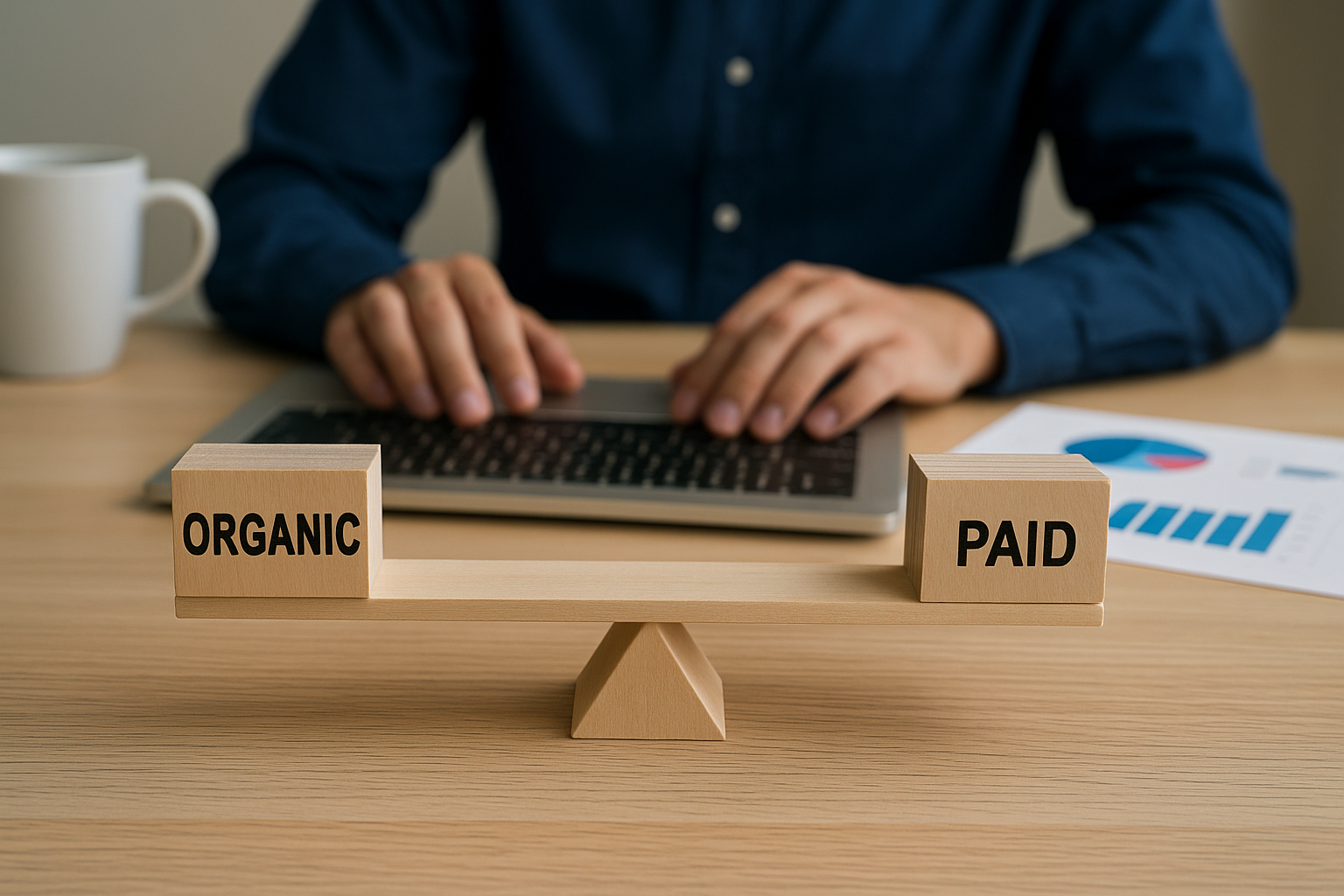
In the ever-evolving world of digital marketing, one of the most common questions businesses ask is:
“Should I focus more on organic strategies or invest in paid marketing?”
The truth is—both can drive powerful results, but knowing how (and when) to use each is the key to maximizing your marketing ROI in 2025.
This article compares organic vs. paid marketing across key factors like cost, speed, ROI, and strategy, so you can make smarter budget decisions for your brand.
1. What is Organic Marketing?
Organic marketing involves strategies that attract traffic and leads naturally over time, without paying for placement. These include:
-
SEO (Search Engine Optimization)
-
Social media content
-
Blogging and content marketing
-
Email newsletters
-
Word-of-mouth and referral traffic
It focuses on long-term relationship building and brand trust.
2. What is Paid Marketing?
Paid marketing involves paying for visibility through platforms like:
-
Google Ads (Search, Display, Shopping)
-
Facebook, Instagram, TikTok Ads
-
YouTube pre-roll ads
-
Sponsored content or influencer partnerships
It delivers fast traffic and immediate visibility—ideal for time-sensitive campaigns.
3. Organic vs. Paid: Side-by-Side Comparison
| Factor | Organic Marketing | Paid Marketing |
|---|---|---|
| Cost | Low monetary cost, high time investment | Pay-per-click or impression-based |
| Speed | Takes time to build momentum | Instant results and traffic |
| Sustainability | Long-lasting with consistent effort | Stops when you stop paying |
| Trust & Credibility | High (content builds authority) | Lower (perceived as ads) |
| Scalability | Slower, content-dependent | Easily scalable with budget |
| ROI Over Time | High long-term ROI | High short-term ROI |
| Best For | Building brand authority, SEO, loyalty | Product launches, promotions, retargeting |
4. Use Cases: When to Choose Organic
Choose organic marketing if you:
-
Want to build long-term brand value
-
Have a limited ad budget
-
Need to improve SEO and search visibility
-
Want to grow loyal communities (like email or social followers)
-
Offer educational, expert-driven content
Examples:
-
A SaaS company growing blog traffic via SEO
-
A local service provider building a Google Business Profile
-
A coach using YouTube and email to nurture leads
5. Use Cases: When to Choose Paid
Go paid when you need:
-
Quick results or traffic boosts
-
To launch a new product or offer
-
To run limited-time campaigns
-
Precise audience targeting (based on behavior, demographics, etc.)
Examples:
-
An eCommerce store running Facebook remarketing ads
-
A real estate agent using Google Ads for local leads
-
A DTC brand testing new product offers on TikTok
6. How to Combine Both for Maximum ROI
The smartest brands don’t choose between paid and organic—they blend both. Here’s how:
Use Paid to:
-
Promote new content you’ve created organically
-
A/B test offers or messaging before scaling
-
Retarget website visitors or cart abandoners
-
Drive traffic to gated content or lead magnets
Use Organic to:
-
Build SEO authority over time
-
Nurture and retain leads from paid campaigns
-
Establish brand voice and credibility
-
Support social engagement and community growth
Example Strategy:
Run a paid ad to promote an eBook → Capture emails → Nurture leads with organic content (emails, blogs, videos).
7. How to Split Your Marketing Budget in 2025
There’s no one-size-fits-all answer, but here’s a practical guideline based on business type:
| Business Type | Recommended Budget Split (Organic / Paid) |
|---|---|
| Startups | 30% Organic / 70% Paid (quick visibility) |
| Growing SMBs | 50% Organic / 50% Paid |
| Established Brands | 60–70% Organic / 30–40% Paid |
| eCommerce or DTC | 40% Organic / 60% Paid |
Adjust based on results. Measure what works, and rebalance every 3–6 months.
Final Thoughts
In 2025, it’s not organic vs. paid—it’s how well you use both.
Paid marketing gives you the speed; organic marketing gives you the depth. Together, they create a scalable, sustainable digital strategy.
Want to make smarter marketing decisions?
Start tracking your metrics, set realistic goals, and build campaigns that blend value and visibility.